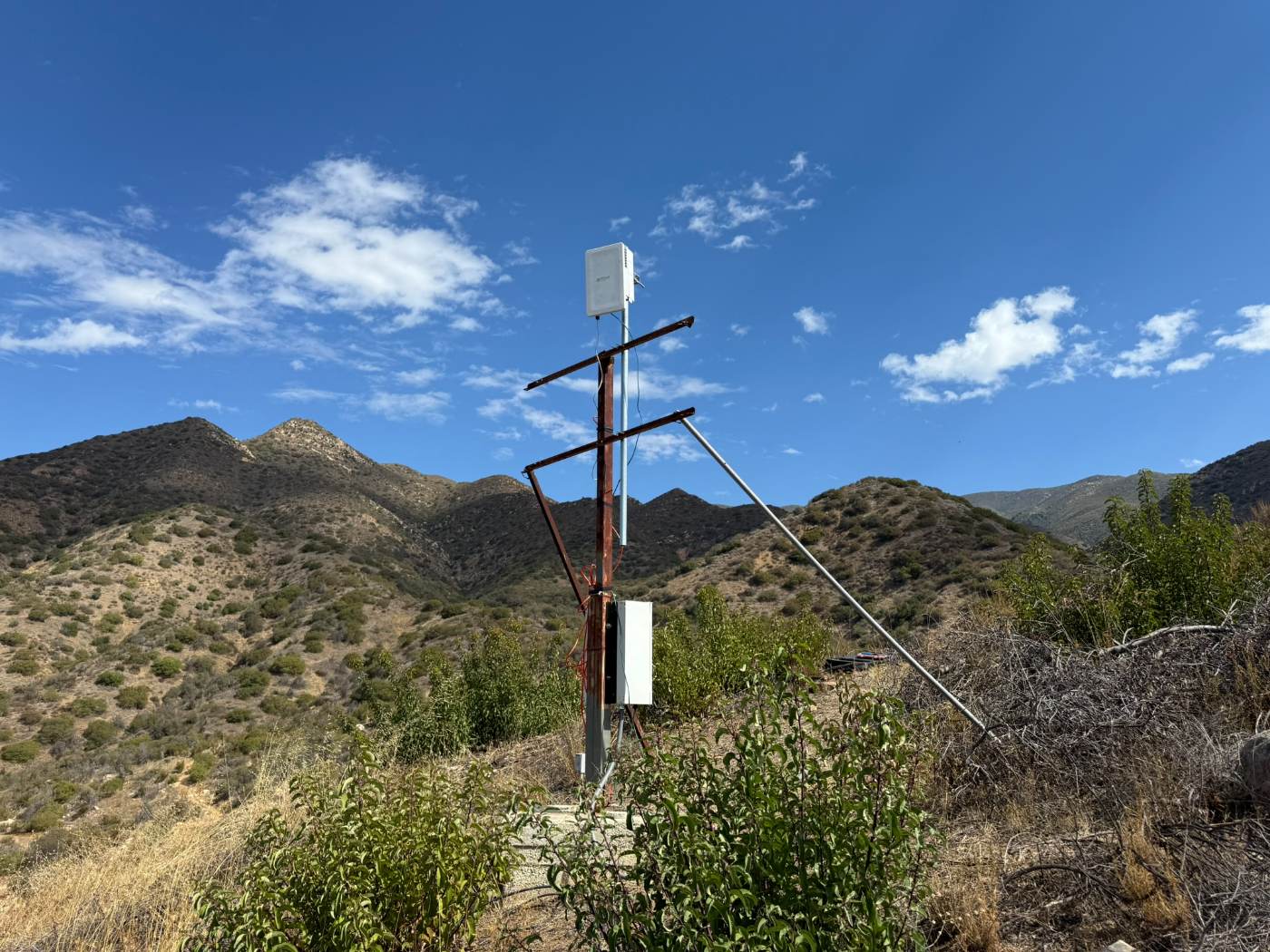
The challenge: connectivity for a safer campus
Across the country, schools and municipalities are working to improve safety and visibility on campus. The Thacher School in Ojai, California sits on 540 acres of varied terrain, fields, stables, athletic facilities, hillsides, and a solar array. Indoor WiFi served the classrooms and main buildings well, but the things that keep a campus safe live outdoors and on the move: security staff walking the grounds, patrol vehicles, outdoor cameras, and the critical network systems behind them. Limited range, interference, and the cost of trenching cable left parking areas, open fields, and the far edges of campus, exactly where safety coverage matters most, without a reliable signal.
Thacher's IT Director, Jerry Holden, wanted security teams, vehicles, cameras, and AI-enabled sensors to stay reliably connected everywhere, from the riding arenas to the athletic fields to the solar field, without pulling miles of cable.
"Our goal was to see everything that happens across campus, from the stables to the solar field, without pulling miles of cable."
The vision: safer schools, owned and operated
Bright5G's Jason Thomas designed a network architecture built to deliver reliable coverage and performance across the whole 540-acre property, built for safety. Traditional WiFi and Ethernet were never going to cover that much open terrain. The answer was private wireless: the reach and reliability of cellular with the operational simplicity of cloud-managed networking, the entire system owned and run by the school rather than rented from a public carrier.
This is the heart of the Bright5G safer-schools vision: one private network dedicated to the campus, carrying security communications, connected patrol vehicles, outdoor cameras, and critical operational systems, all watched on the Guardian platform. When a network the school owns is the backbone of campus safety, that coverage no longer depends on a public carrier that may or may not reach the back fields.
We proposed a pilot at Thacher built on a professional-grade outdoor radio — one unit with the antenna built in, and the option to add stronger antennas later as coverage grows.
The solution: designing private wireless for 540 acres
Bright5G built an outdoor coverage plan for the campus. We uploaded Thacher's site map, modeled the terrain, and generated a coverage model. The result was decisive: a single radio, mounted at roughly 1,400 feet of elevation, would cover most of the campus, and two radios would close the gaps behind buildings and natural obstacles for complete coverage. Even at the farthest point from the radio, the plan still held a strong, usable signal — enough to keep security staff, vehicles, and cameras connected at the very edges of the property.
The install: live in minutes
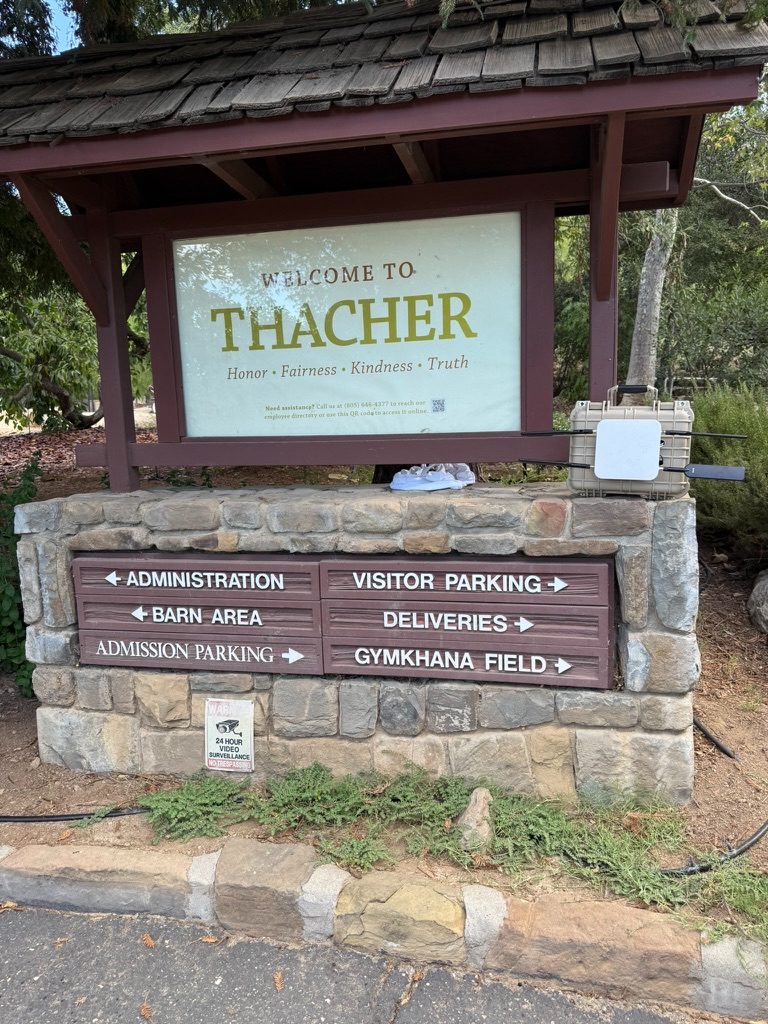
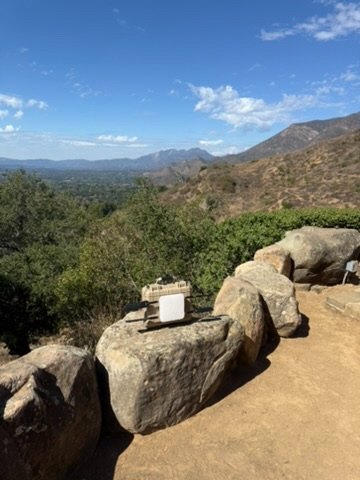
On install day, setup was as simple as it gets. We connected power and internet, and within four minutes the private 5G network was live. SIM and eSIM devices joined instantly, iPhones, iPads, Android phones, cellular routers, and WiFi gateways bridging back to the existing campus network.
Power, internet, four minutes. The network came online out of the box, so the team could focus on the result, not the rollout.
To validate coverage, we bridged a WiFi gateway to a portable power pack, mounted it on a vehicle, and drove the 540-acre campus measuring signal and speed, the same way a patrol vehicle would move across the grounds. Even before the stronger external antenna arrived, the results beat expectations: strong, continuous signal and reliable connectivity across wide-open areas.
"I wasn't sure a single radio could extend this far, but I was pleasantly surprised by the coverage and speed. Being able to integrate with our existing devices really simplifies everything."
The results
The impact: a blueprint for safer campuses
Thacher's network is more than a pilot, it is a model for schools and municipalities nationwide. It shows that private wireless can extend enterprise-grade coverage for security teams, vehicles, and critical systems across an entire 540-acre campus at a fraction of the cost and disruption of trenching fiber, and that it integrates cleanly with the cameras and devices a school already owns. A full build with two outdoor radios extends complete coverage and reliability across the full property, all owned by the school and operated on the Guardian platform, the network behind a safer-schools plan.
Scope your campus with a free coverage survey →