The stakes
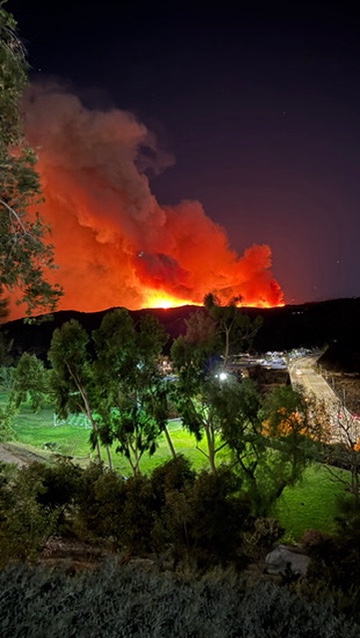
In January 2025, wildfire tore through the hills above Los Angeles. Milken Community Schools' East Campus sat directly in its path. As fire approaches, the two things a campus needs most, power and connectivity, are the first to fail, and they fail exactly when every camera and every comms link suddenly matters more than ever.
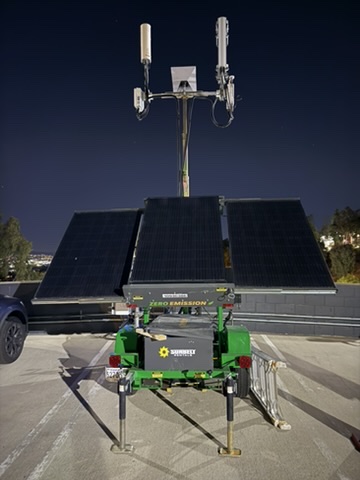
Bright5G was already on site. Ahead of the fire, we had set up a solar-powered lithium battery cell trailer at Milken East, running off Starlink and operating an off-grid private cell tower. When the campus needed it, the network was already standing.
When the grid fails and the carriers drop, the safety systems still need to be watching. That is the whole job.
The grid goes down
As the fire closed in, the campus lost utility power. With it went the wired network, and the moment that dropped, everything that depended on it went dark: the WiFi, the wired network, and most critically, the security cameras. At the worst possible moment, the school lost its eyes on the property.
Then came the order that raised the stakes again. The fire department directed Milken to leave the property gates open, so crews could enter to fight the fire if they had to. An open, evacuated campus in the path of a wildfire, with no cameras and no network. That was the situation we had to solve, immediately.
What we installed
Our off-grid trailer was already delivering the one thing nothing else on campus had: a live, independent network. Solar and lithium kept it powered with the grid gone. Starlink carried the internet connection with the wired lines down. The private cell tower put a professional-grade private network over the campus that owed nothing to the public carriers, which were themselves failing under the fire.
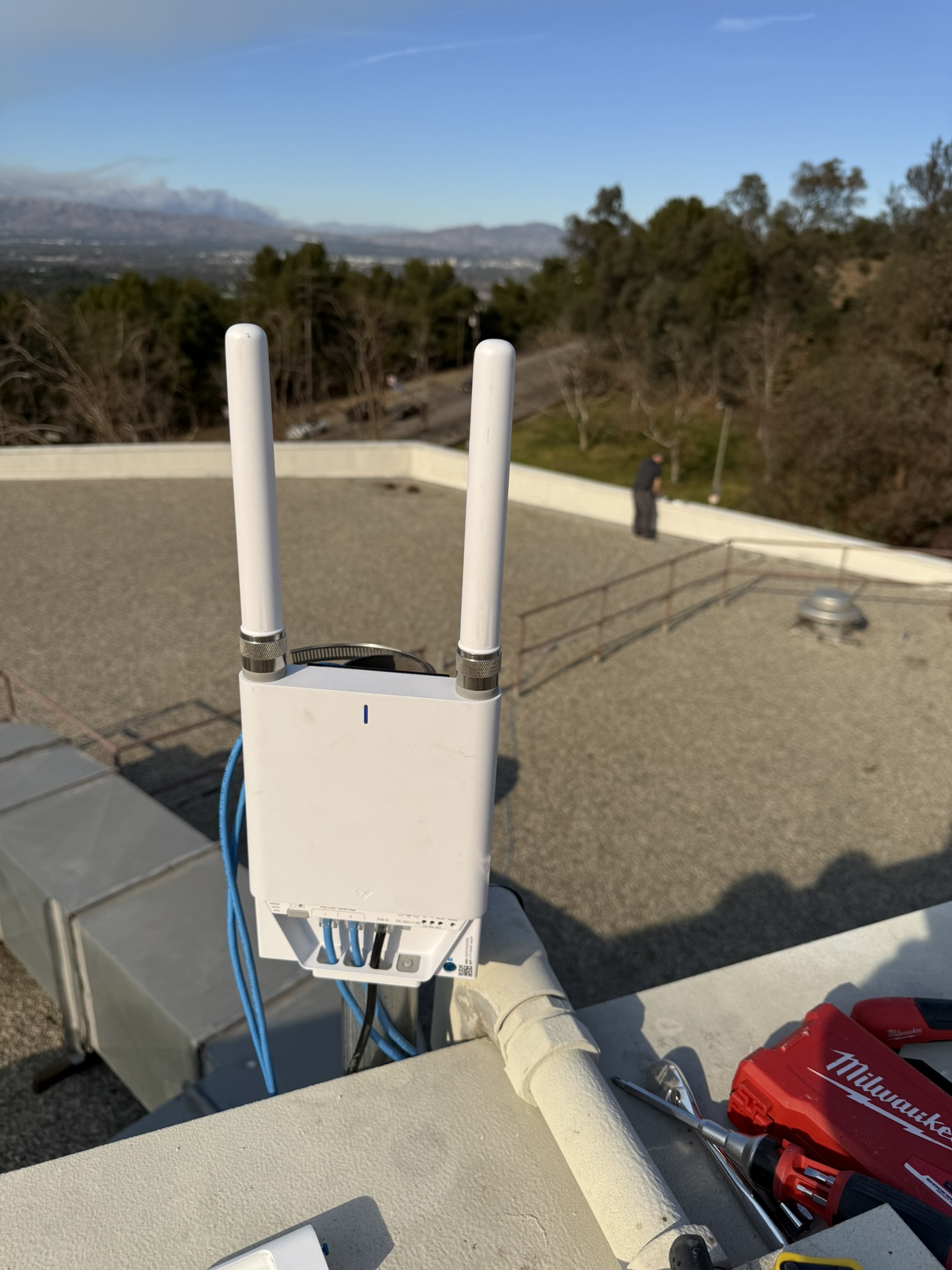
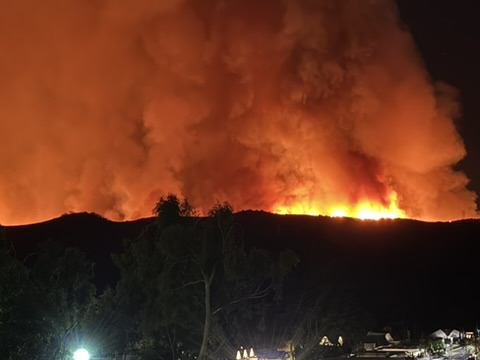
To get the cameras back online, we connected Verkada cellular gateways to the private network using our own SIM cards. Those gateways brought critical Verkada security cameras back to life over private cellular, completely independent of the dead wired network, including a Verkada 4K PTZ camera positioned on the approaching fire.
We also stood up WiFi access points at key locations across the campus, including the guard stations and guard gates, each one connected over the private 5G network. With the wired network down and the gates ordered open, that gave personnel on the ground working WiFi exactly where they needed to coordinate, without a single working wired drop anywhere on campus.
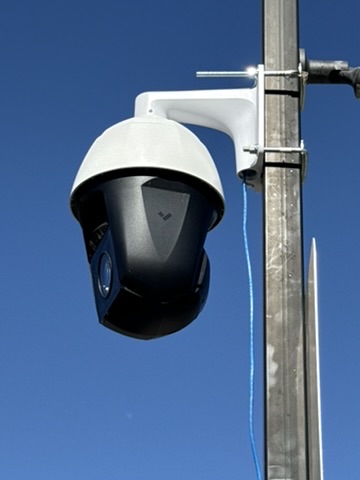
Then we did something only a live network makes possible. We shared a link to that 4K PTZ feed, so security personnel, school staff, and the families of the Milken community could watch the fire approach in extraordinary detail, in real time, from anywhere. People who had evacuated could see their school, and see exactly what was happening to it, when every other window into the campus had gone dark.
What Guardian shows
Every layer reported into Guardian Command, the single pane of glass our team operates around the clock. Through the event we watched battery runtime, the satellite link, private cellular coverage, and the status of every camera in one view. When power and the public network were gone, Guardian was how we knew the safety systems were still up, and kept them that way.
The outcome
Through the fire, Milken East kept a live network and live critical cameras when the grid, the wired network, and the public carriers had all failed. An evacuated campus under a fire department open-gate order still had eyes on every corner, and a community forced to flee still had a window back to their school. That is what a private network you do not have to share, running on power that does not depend on the grid, makes possible.